
For a normal home, DIY formaldehyde removal usually does the job: spot-treating new carpentry and furniture with a proven spray costs far less and you can do it yourself in an afternoon. A professional service is worth paying for when the space is large or complex, when you want it handled with before-and-after air testing and documentation, or when you simply can't do it yourself. Plenty of people do a bit of both, a service for scale and DIY for touch-ups.
When DIY makes sense
Most formaldehyde in a Singapore flat comes from new wood-based furniture and carpentry: wardrobes, kitchen cabinets, bed frames, MDF and plywood that off-gas after a fresh renovation. These are the exact surfaces a homeowner can reach and treat directly. If you've just moved in, just done up the place, or bought a few new pieces, DIY is the sensible starting point.
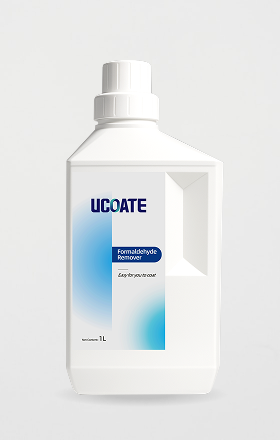
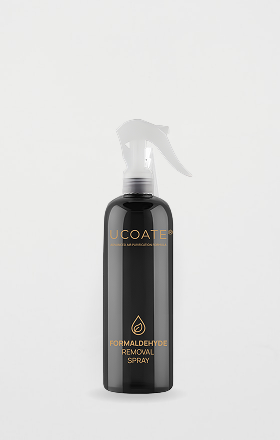
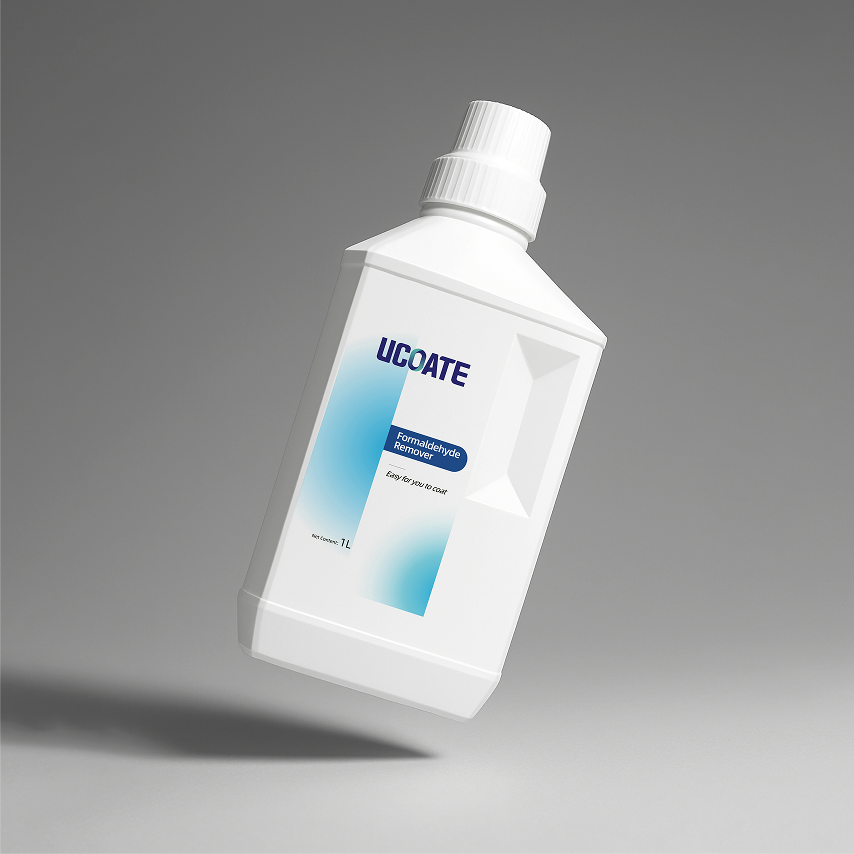
The DIY option we make is the UCOATE Formaldehyde Remover Spray. It's a 500ml water-based formula, non-toxic (OECD 420), safe around kids and pets when used as directed. Rather than mask the smell, it binds with formaldehyde and breaks it down into water and CO2 under normal indoor light. In SGS testing the spray removed 93.83% of formaldehyde. One bottle covers roughly 15 to 20 m², so a typical wardrobe-and-cabinet treatment is a small spend. You can pick it up on Shopee. If you want a room-by-room walkthrough first, see our DIY guide by home type.
When to pay for a professional service
A professional formaldehyde removal service earns its fee in a few clear situations. Large floor areas, like a whole landed house or a commercial fit-out, are slow and awkward to treat yourself. So are units with high readings, lots of concealed carpentry, or false ceilings where the source isn't easy to reach. If you need documented proof for a landlord, a buyer, or your own peace of mind, a service that does before-and-after air testing gives you a paper trail DIY can't match. And if you're heavily pregnant, time-poor, or just don't want to handle it, paying someone is a fair call.
What a service typically includes (and why it costs more)
A removal company usually sends a team, measures indoor air quality, treats every surface including the hard-to-reach ones, and re-tests afterwards. You're paying for labour, equipment, IAQ testing and a warranty or report, not just the chemistry. Many Singapore contractors actually use the same SGS-tested formula we supply to the trade, so the active ingredient may be no different from the bottle you'd buy yourself. The premium is the service around it. If you're comparing providers, our guide on choosing a removal company and avoiding common mistakes is worth reading before you commit.
How much cheaper is DIY?
DIY is far cheaper than a service, often by a wide margin, because you're buying product only and not labour, testing or a site visit. We won't quote a figure for either, because real costs depend on your floor area, how much carpentry there is, how many coats are needed, and whether you want IAQ testing. The honest answer is to get a couple of quotes for services so you can compare scope, then weigh that against the cost of treating the place yourself.
How to decide for your home
Start by knowing your situation. If you can, test the formaldehyde levels at home first, so you're acting on a reading rather than a guess. Small to mid-size flats with reachable furniture lean DIY. Big spaces, high readings, or a need for documentation lean towards a service. If you're still unsure which product suits you, our guide to choosing a formaldehyde remover breaks down the options.
Quick DIY vs service comparison
- Best for DIY: normal HDB flats and condos, new furniture and carpentry, spot treatment and touch-ups, tight budgets.
- Best for a service: large or landed homes, commercial spaces, high readings, concealed sources, or when you need air-testing documentation.
- Cost: DIY is product-only and far cheaper; a service charges for labour, testing and a report.
- Effort: DIY takes an afternoon and a steady hand; a service handles everything for you.
- Proof: DIY relies on your own optional testing; a service gives before-and-after IAQ results.
- Common middle ground: hire a service for the whole-home job, then keep a spray for new pieces you add later.
There's no single right answer. Match the method to the size of the problem and how much you want it documented, and you'll spend sensibly either way. For more background on the process, see our overview of formaldehyde removal in Singapore.