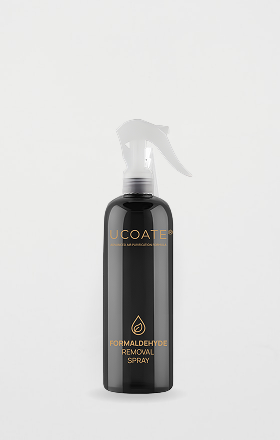
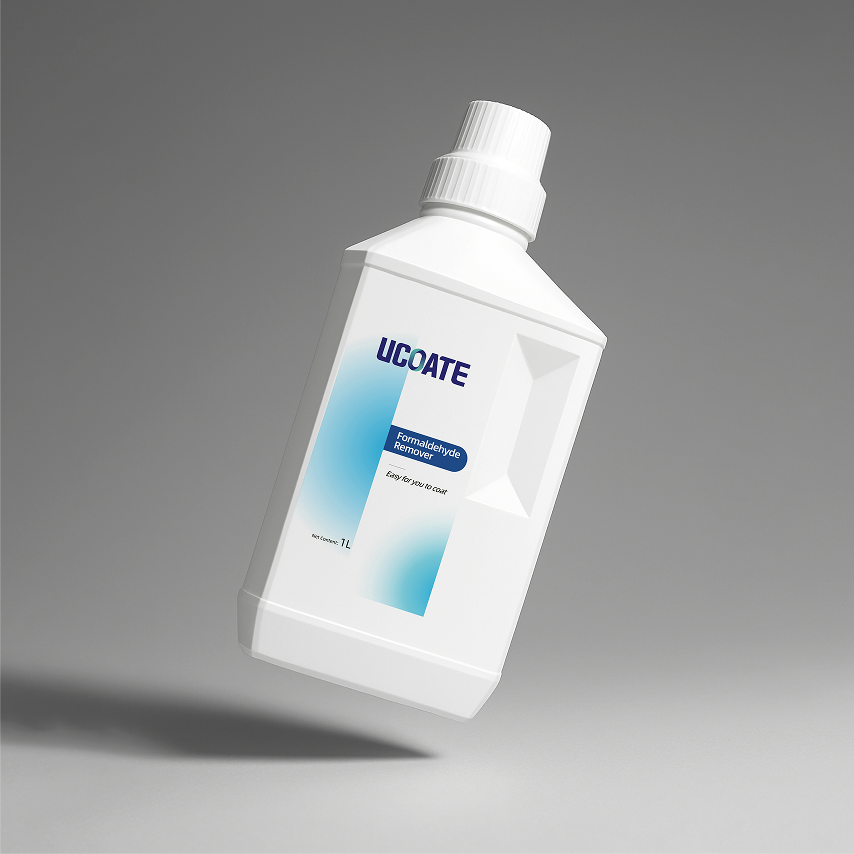
People talk about formaldehyde and VOCs as if they're two separate things you have to worry about. They aren't. Formaldehyde is a VOC. It's just the VOC everyone learned the name of.
That sounds like a technicality. It isn't, because it changes what you buy.
How the categories nest
Volatile organic compounds are carbon-based chemicals that evaporate at room temperature. Thousands of them exist. Indoors, the ones you meet are benzene, toluene, xylene, acetaldehyde, limonene from cleaning products, and formaldehyde.
TVOC is the sum of all of them in the air at once. Formaldehyde sits inside that sum. So when a meter shows you HCHO 0.09 and TVOC 1.4, the formaldehyde isn't in addition to the 1.4 — it's part of it.
Formaldehyde gets its own line on the display for three reasons. It's extremely common indoors. It's been studied more than almost any other indoor pollutant, so there are real guideline numbers for it. And it comes from a source the others mostly don't share.
Different sources, different behaviour
This is the part that matters practically.
Formaldehyde comes overwhelmingly from urea-formaldehyde resin — the adhesive binding plywood, MDF and particle board together. Your wardrobes, kitchen carpentry, bed frame, laminate flooring, flat-pack furniture. That glue doesn't finish releasing when the furniture is delivered. It releases slowly for years, and faster when it's warm and humid, which describes essentially every day in Singapore.
Most other VOCs come from solvent — paint, varnish, adhesive, sealant, new textiles, cleaning products. Solvent evaporates, and evaporation finishes. Fresh paint releases most of its load in days to weeks. Ventilate properly and a lot of it genuinely does clear.
So the two problems have different shapes. The VOC problem is loud and fades. The formaldehyde problem is quiet and stays.
Why one product doesn't do both
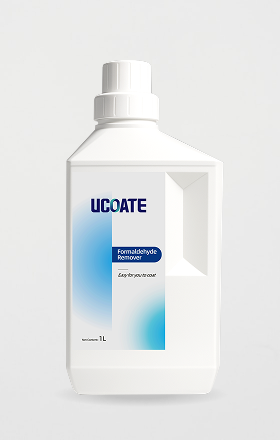
Chemistry that captures and breaks down formaldehyde is doing something specific. Formaldehyde has a reactive aldehyde group, and our formulation uses that — positively charged chitosan agents bind the molecule, it's locked into a stable compound through Schiff base formation, then a zinc oxide catalyst breaks that down into water and carbon dioxide. That's a targeted reaction. It's why the SGS test came back at 93.83%.
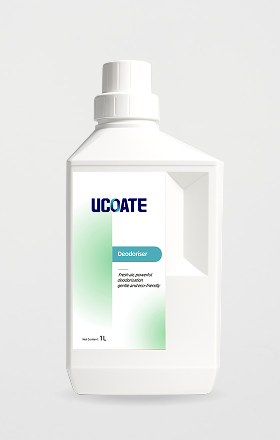
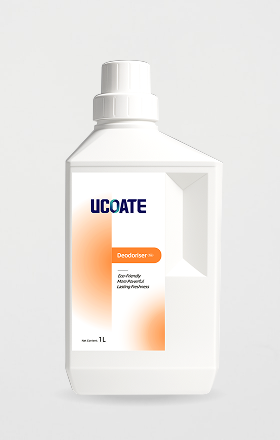
Benzene doesn't have an aldehyde group. Neither does toluene, or ammonia. They need a different approach, which is why our Deodoriser is built on plant tannins and amino acids alongside the chitosan system, and why it's tested separately: over 93% benzene removal, over 90% ammonia, over 85% TVOC in an independent Japanese lab report.
Any product claiming to remove everything equally well is worth a raised eyebrow. Ask what it was tested against and by whom.
Working out which one you've got
Your nose is a decent first instrument, with one caveat. That sharp chemical renovation smell is mostly solvent — paint and adhesive VOCs. Formaldehyde is much harder to smell, and plenty of people can't detect it at all until it's well above the guideline. So a room that smells fine can still have a formaldehyde problem.
A meter helps if you read it properly. High TVOC and low HCHO points at paint and adhesive. High HCHO points at the carpentry. Both high means the renovation just finished. The reading guide covers the thresholds.
The physical test is simpler than either: open a wardrobe or a cabinet that's been shut for a day and put your head in it. Formaldehyde concentrates in enclosed spaces. If that hits you harder than the room does, you know what you're dealing with and where.
What to do about each
Solvent VOCs: ventilate, properly and for weeks. Cross-ventilation with fans while the place is empty. Most of it will go.
Formaldehyde: ventilation helps while the windows are open and stops helping when you shut them. Treat the surfaces instead — the new board and joinery, and particularly the insides of cabinets and wardrobes.
Both, which is most people after a renovation: treat the carpentry for formaldehyde and the wider space for VOCs. That's why the two products get ordered together. More on how the range splits: TVOC and VOC removal.