This comes up often enough that it's worth its own answer. Someone treats a new flat for formaldehyde — properly, with a real product — and a week later the place still smells like a renovation. So they assume the product didn't work.
It probably did. Smell just isn't how you'd know.
Formaldehyde barely smells
At the concentrations found in homes, formaldehyde is close to odourless for most people. It has a faint sharp smell at higher levels, but detection thresholds vary enormously between individuals and plenty of people can't pick it up at all until it's well above the indoor guideline of 0.1 mg/m³.
That cuts both ways, and both are worth knowing. A flat that smells fine can have a formaldehyde problem. And a flat that's had its formaldehyde dealt with can still smell strongly of something else.
The smell is solvent
What you're actually smelling after a renovation is mostly solvent: paint and varnish, the adhesive under laminate flooring, sealant around every joint, plus off-gassing from new vinyl and new textiles.
Those are volatile organic compounds too — benzene, toluene, xylene and relatives — and they show up in the TVOC number on an air quality meter rather than the HCHO one. They're much easier to smell than formaldehyde and they're what your nose is reporting.
So the common situation is a flat where the formaldehyde has been treated and the TVOC hasn't. Two problems. One got dealt with.
Why one product doesn't cover both
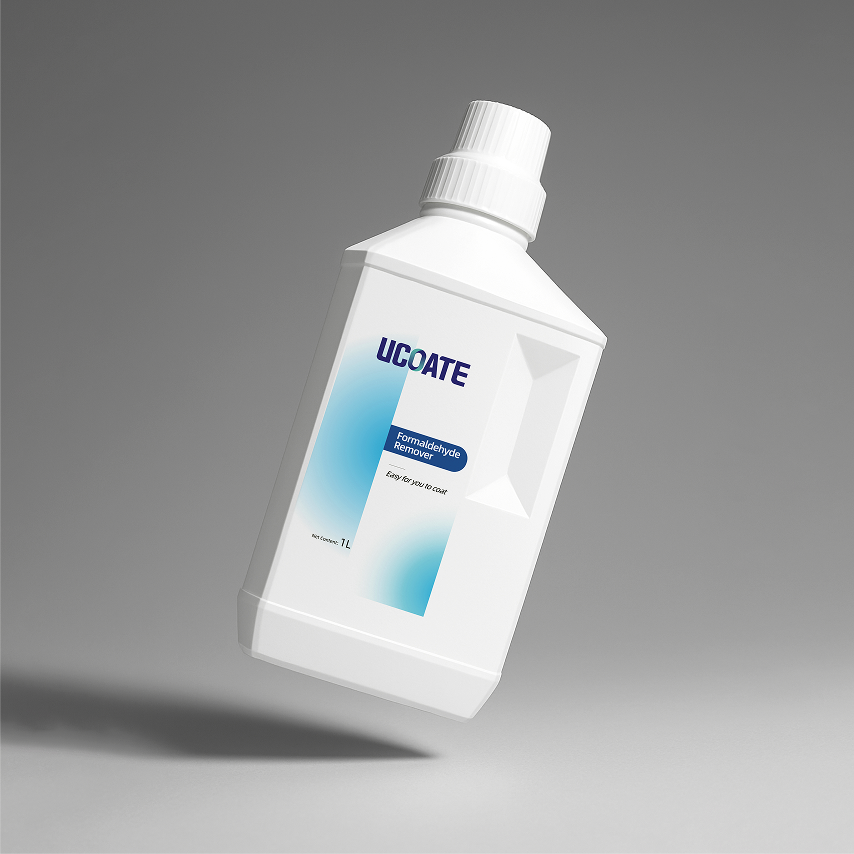
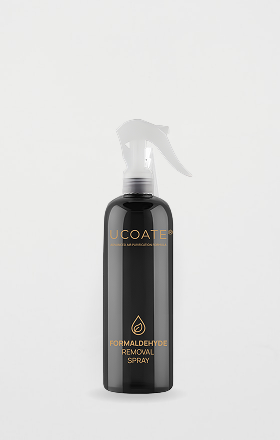
A formaldehyde remover works on formaldehyde specifically. Ours binds the molecule using positively charged chitosan agents, locks it into a stable compound, then breaks that down with a zinc oxide catalyst into water and carbon dioxide. SGS Singapore tested it at 93.83% removal. That reaction depends on formaldehyde's aldehyde group.
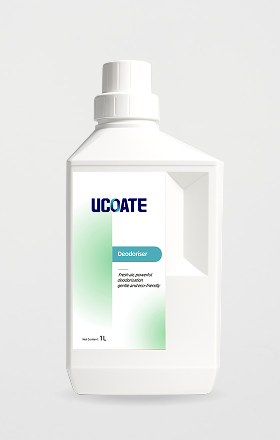
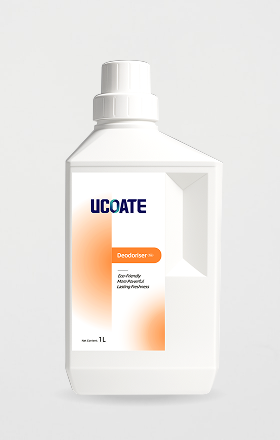
Toluene doesn't have one. Neither does benzene, or ammonia. They need different chemistry, which is why our Deodoriser is a separate product with separate testing — over 85% TVOC removal, over 93% benzene, over 90% ammonia in an independent Japanese lab report. Trade buyers who do post-renovation work almost always order both, because a renovation reliably produces both.
A single product claiming to handle every compound equally is making a claim worth checking. Ask what it was tested against, by whom, and at what result.
Masking is not removing
The tempting shortcut here is an air freshener or a fragranced spray. It doesn't remove anything. It adds a smell you like on top of one you don't, and when it fades — and it will — the original is exactly where it was, because nothing touched the compounds producing it.
Same logic applies to the bowls of vinegar, coffee grounds and cut onions that circulate online. All of those work by giving your nose something stronger to notice. None of them change what's in the air.
What to do instead
Ventilate first, and give it real effort — both ends of the flat open, fans running, done over weeks. Solvent evaporates, so this genuinely works on the smell in a way it never quite does on formaldehyde.
Get the sources out. Leftover paint tins, adhesive, sealant tubes sitting in a storeroom are still releasing.
If it's still there after a month, treat it. Our odour removal page covers the commercial side, and TVOC and VOC removal explains which product does which job. The short version: formaldehyde and smell are separate purchases, and being told otherwise is usually a sales problem rather than a chemistry one.