TVOC & Odour · Trade Supply
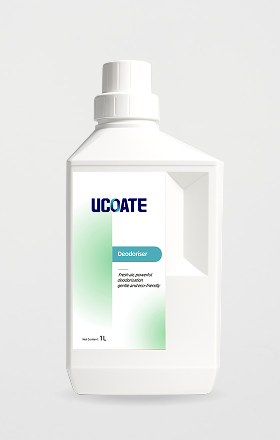
Deodoriser
Clears the VOCs behind indoor smells — over 85% of TVOC and 93% of benzene in lab testing. Usually ordered alongside the Formaldehyde Remover.
Learn more
Formaldehyde is one volatile organic compound. A renovation releases dozens. We supply the water-based products that clear the rest — benzene, ammonia and the wider TVOC load — to contractors, facilities teams and resellers.
TVOC stands for total volatile organic compounds. It is not one chemical — it is the combined concentration of every volatile compound a meter can pick up in a room at once: solvent from paint, adhesive from new joinery, plasticiser from vinyl flooring, and formaldehyde alongside them.
That distinction matters when you are buying. A product tested only against formaldehyde tells you nothing about the other compounds, and most of the smell people complain about after a renovation is not formaldehyde at all. It is solvent and adhesive VOCs, which is why a room can test clean for formaldehyde and still smell like a worksite.
Reading a meter and not sure what the number means? See our HCHO and TVOC reading guide.
Different compounds come from different materials, and they need different chemistry. This is how our range splits the work.
| Compound | Where it comes from indoors | Product | Tested result |
|---|---|---|---|
| Formaldehyde (HCHO) | Plywood, MDF and particle board adhesives, laminate flooring, new joinery and cabinetry. | Formaldehyde Remover | 93.83% removal (SGS Singapore) |
| Benzene | Solvent-based paints, varnishes, adhesives, sealants and some synthetic furnishings. | Deodoriser | > 93% removal (Japanese lab report) |
| Ammonia (NH₃) | Concrete additives, cleaning chemicals, nappy-change and washroom areas, pet areas. | Deodoriser | > 90% removal (Japanese lab report) |
| Total VOCs (TVOC) | The combined load — paint, adhesive, sealant, new textiles, cleaning products, cooking. | Deodoriser / Deodoriser PRO | > 85% removal (Japanese lab report) |
Clears the VOCs behind indoor smells — over 85% of TVOC and 93% of benzene in lab testing. Usually ordered alongside the Formaldehyde Remover.
Learn more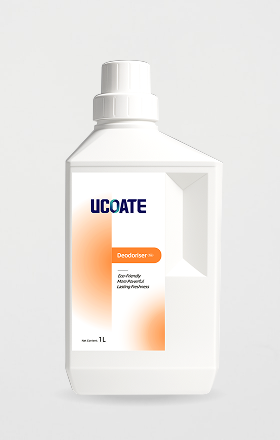
A higher-capacity formula for large or busy commercial spaces. Supplied in volume.
Learn more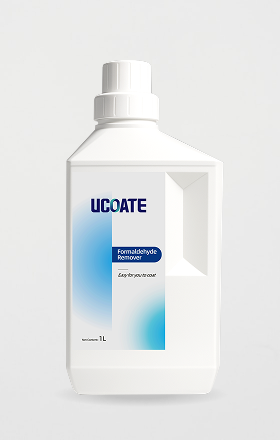
Our main product. SGS-certified at 93.83% removal, supplied by the case to contractors and resellers.
Learn moreMost trade buyers order the Formaldehyde Remover and the Deodoriser together, because a renovation leaves both problems behind. Send us both volumes and we will quote them together.
New partitions, carpet and workstations release a mixed VOC load, not just formaldehyde. Treat the fit-out on handover.
Paint, sealant and new joinery on a tight opening schedule, with no month to air the unit out first.
The lingering renovation smell after the formaldehyde work is done is usually solvent and adhesive VOCs.
Ongoing VOC and odour control across floors that stay occupied and air-conditioned.
Formaldehyde is a single volatile organic compound. TVOC — total volatile organic compounds — is the combined measure of all of them in the air, including benzene, toluene, xylene and formaldehyde itself. A meter reading a high TVOC and a low formaldehyde means the problem is coming from paint, adhesive or solvent rather than from board and joinery.
Only partly. Our Formaldehyde Remover is formulated for formaldehyde and removes 93.83% of it in SGS testing, but it is not a broad VOC product. The Deodoriser is the one tested against the wider load: over 85% TVOC, over 93% benzene and over 90% ammonia. Most trade buyers order both, because a renovation produces both problems.
Over 85% of total VOCs in independent Japanese laboratory testing, along with over 93% of benzene and over 90% of ammonia. Those results are for the standard Deodoriser formulation.
Yes. An air freshener adds fragrance on top of the VOCs. The Deodoriser neutralises the compounds themselves using plant tannins, amino acids and a carboxymethyl chitosan and zinc oxide system, so the odour goes rather than being covered.
Yes. Both deodorisers are water-based, non-toxic and non-corrosive, and are safe in occupied interiors when applied as directed. Touch dry in about 30 minutes, fully cured in 2–3 hours.
Yes. We supply by the case and in bulk with trade pricing for contractors, facilities teams, cleaning companies and resellers across Singapore. Send us your volumes and we will quote them.
Trade pricing for contractors, facilities teams, cleaning companies and resellers — with the lab documentation your own clients ask to see.