That sharp chemical smell in a new flat, a fresh set of wardrobes or a just-handed-over condo is usually formaldehyde. It off-gasses from the glues and coatings in plywood, MDF, laminate and other composite wood — the materials almost every Singapore renovation is built from — and it can keep coming out of new carpentry and furniture for months, sometimes well over a year.
You do not need a contractor or an expensive treatment service to deal with most of it. This guide covers the basics that apply to any home, then points you to a step-by-step plan for your specific housing type.
Why new Singapore homes hold onto formaldehyde
Two things make it worse here than in cooler countries. First, the heat and humidity speed up off-gassing, so materials release formaldehyde faster. Second, most of us keep the windows shut and the aircon on, so whatever is released stays trapped inside instead of clearing out. A flat can look and feel finished while the air is still loaded — and because formaldehyde is colourless and often has no obvious smell once you get used to it, you cannot tell by sniffing.
The DIY approach: ventilate, then treat the source
Airing the place out helps, but only while the windows are open — close them and run the aircon, and levels climb again because the carpentry is still off-gassing. An air purifier has the same limit: a carbon filter only holds formaldehyde until it saturates, then it stops helping. (We go into that in more detail in our piece on whether air purifiers actually help.)
The part you can control is the source. Treating the new wood directly — especially the enclosed spots that off-gas hardest — removes the formaldehyde instead of waiting years for it to fade. So the DIY routine is simple: ventilate to clear what is already in the air, then treat the carpentry and new furniture so less keeps coming out.
Where formaldehyde hides in a Singapore home
It is worst in new, enclosed, low-airflow spaces — the places where off-gassing builds up instead of dispersing. The usual suspects:
- Built-in wardrobes and the insides of all their drawers and shelves
- Kitchen carpentry — cabinet interiors, under the sink, the pull-outs
- Shoe cabinets, store rooms and the HDB bomb shelter (a sealed concrete box that traps everything)
- New mattresses, sofas, bed frames and flat-pack furniture
- Feature walls, TV consoles and any fresh plywood or laminate work
DIY guides for your home type
- DIY formaldehyde removal for a new hdb / bto flat
- DIY formaldehyde removal for a resale hdb flat
- DIY formaldehyde removal for a new condo handover
- DIY formaldehyde removal for a landed home
- DIY formaldehyde removal for a rented room
What to use
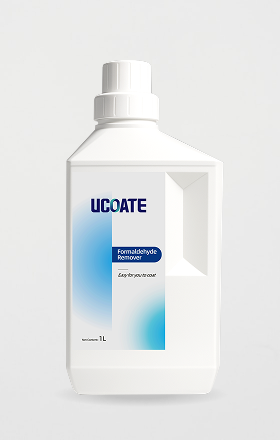
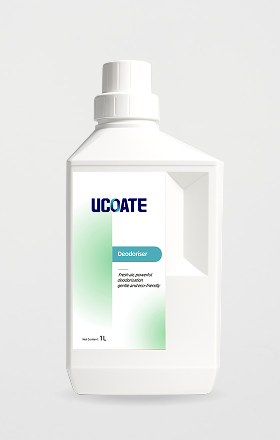
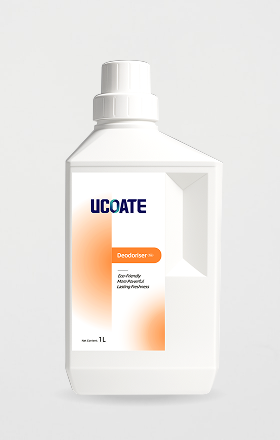
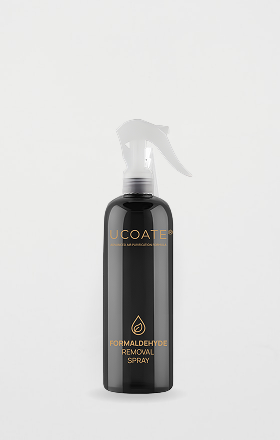
For DIY work at home, we make the UCOATE Formaldehyde Remover Spray — a 500ml hand spray that runs on the same SGS-tested chemistry we have supplied to Singapore renovation contractors and resellers since 2018. It is water-based and classified non-toxic under OECD 420, so it is safe to use around children and pets when you follow the directions on the bottle. Rather than masking the smell, it binds the formaldehyde and breaks it down into water and carbon dioxide, and it works in normal indoor light — no sunlight or machines needed. In SGS laboratory testing the formulation removed 93.83% of formaldehyde. You can buy it on Shopee with delivery across Singapore.
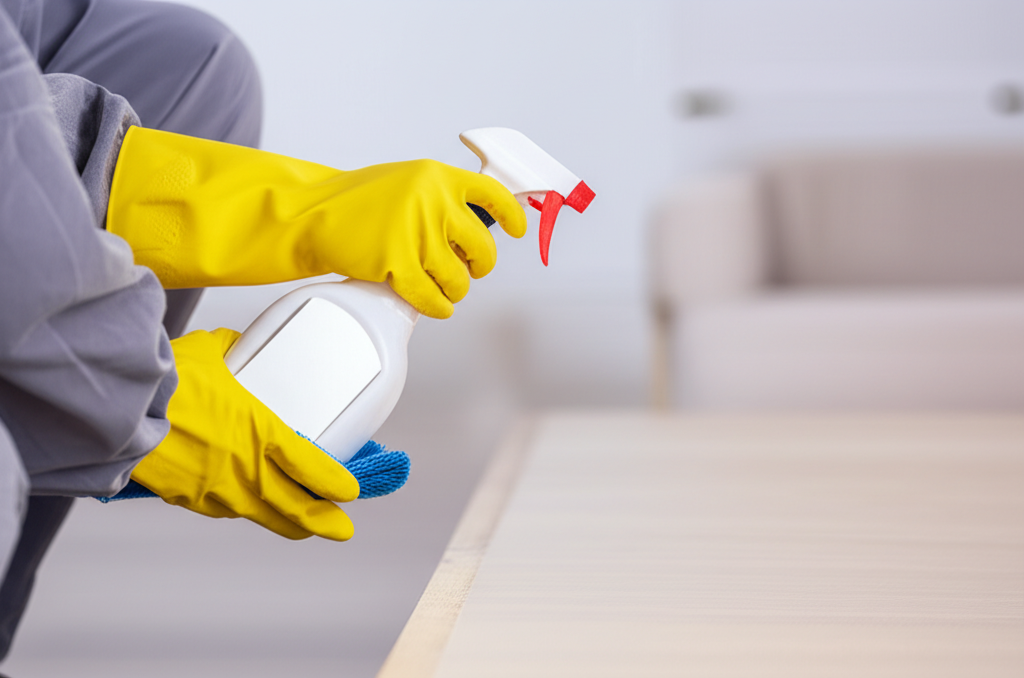
How to apply it: shake well, spray evenly from 20–30cm onto the surface, let it dry naturally, and avoid wiping or cleaning the surface for 3–5 days. For stronger smells, give it a second coat after about 30 minutes. One 500ml bottle covers roughly 15–20 m². Skip black, water-sensitive or discolouration-prone surfaces, and test an out-of-sight spot first if you are unsure.
A few common questions
Can I really do this myself? Yes. Spot-treating new furniture and the inside of cabinets and wardrobes is straightforward — shake, spray, let it dry, ventilate. No machines or professional service needed.
Is it safe with kids and pets at home? The spray is water-based and non-toxic under OECD 420. Treat the surfaces, let them dry, and the room is fine to use as normal.
How long before the air is better? You remove formaldehyde from the surfaces you treat straight away. Keep ventilating in the first weeks after a renovation or a furniture delivery, when off-gassing is at its peak.
More of the questions we get asked, in one place: the UCOATE FAQ.