After completing a renovation, many homeowners in Singapore start to worry about indoor air quality, especially formaldehyde levels from carpentry, furniture, adhesives, and paint.
As awareness increases, more people are engaging formaldehyde removal services.
However, there is an important point that is often misunderstood:
Formaldehyde treatment should not be done just for peace of mind.
It should be done to effectively solve the problem.
In this article, we highlight the key factors to look out for when choosing a formaldehyde removal company, and the common mistakes you should avoid.
Testing Conditions and Equipment Matter More Than You Think
Many homeowners focus only on the reading shown, but overlook how the testing is conducted.
According to SS 554:2021 Indoor Air Quality Standard Singapore, proper testing requires:
Windows and doors to be closed for at least 2 hours
Controlled indoor conditions before measurement
Use of reliable and calibrated instruments
Without following these conditions, the results may not reflect the actual indoor air quality.
Professional-grade detectors such as the PPM Formaldehyde Detector FP-31 are commonly used in the industry and typically cost around SGD 2,000 or more.
Homeowners should be cautious if:
A company uses low-cost or unverified sensors
Testing is done inside cabinets to exaggerate readings
Results are presented without proper explanation
In Singapore, indoor formaldehyde levels above 0.08 ppm are generally considered unsafe.
The Product Used Must Be Safe and Scientifically Tested
The effectiveness of formaldehyde removal depends heavily on the product used.
More importantly, the product must not introduce secondary pollution.
You should always check whether the company can provide:
- Non-toxic certification (e.g. SGS Singapore)
- Formaldehyde removal efficiency test reports
- Common issues in the market
- Chlorine dioxide-based products
- Low cost, often marketed aggressively
- Effects are typically short-lived (1 to 2 days)
- May cause irritation or discomfort
- Titanium dioxide photocatalyst
- Requires UV light to activate
- Limited effectiveness under normal indoor lighting conditions
Many customers are not informed of these limitations.
What to look for instead
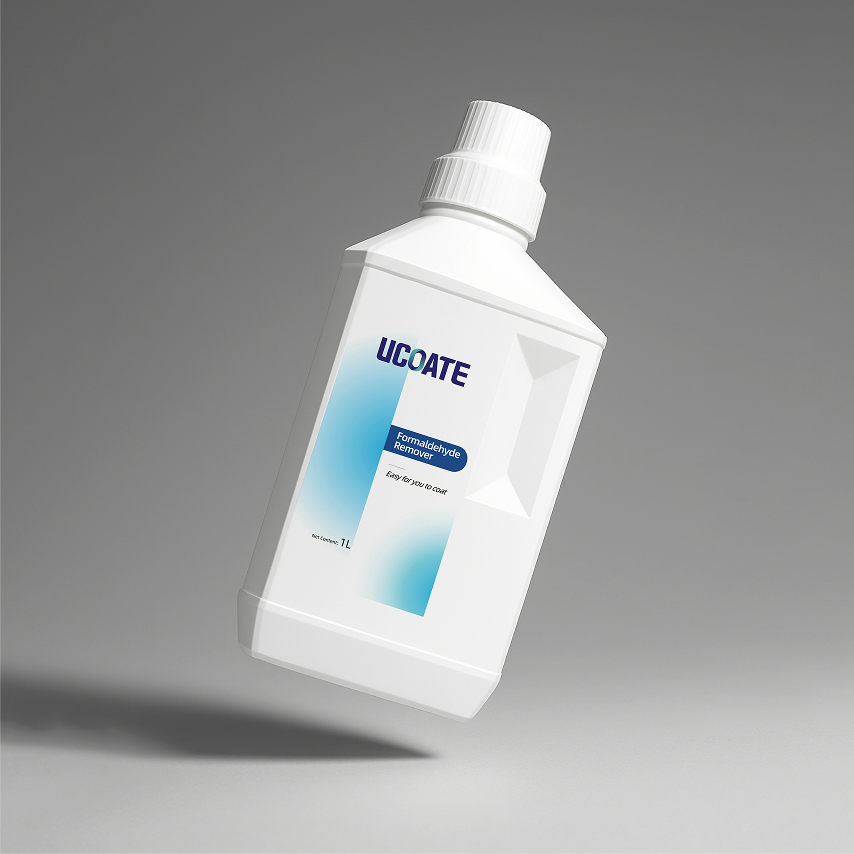
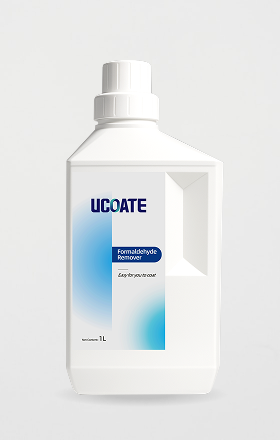
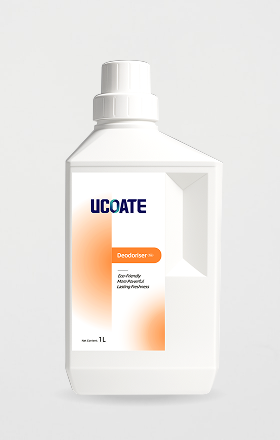
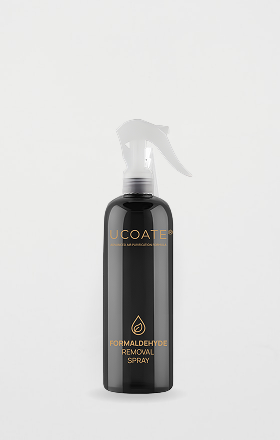
More advanced solutions such as UCOATE Formaldehyde Remover are already widely adopted by professional service providers in Singapore.
These solutions typically offer:
- Verified non-toxic formulation
- Proven formaldehyde reduction performance
- Effectiveness under normal indoor conditions without UV
No Follow-Up Testing Is a Major Red Flag
A common industry practice is:
Test → Treatment → Immediate re-test → Job completed
This approach is not sufficient.
Formaldehyde emission is continuous, especially from:
- Carpentry
- Cabinets
- Laminates
The highest release period usually occurs within the first few weeks after renovation.
A responsible service provider should:
- Conduct a follow-up inspection after 5 to 7 days
- Verify that levels remain within a safe range
- Ensure there is no rebound effect
Do Not Choose Based on Price Alone
Formaldehyde removal is directly related to your health and living environment.
Choosing the cheapest option may lead to:
- Ineffective treatment
- Temporary results
- Potential exposure to harmful chemicals
Instead, you should evaluate:
- Testing standards and methodology
- Product safety and certification
- Treatment process and experience
- Whether follow-up support is provided
- Final Thoughts
Choosing the right formaldehyde removal company is not just about cost.
It is about ensuring:
- Safety for your family
- Reliable and accurate testing
- Long-term effectiveness
When done properly, formaldehyde treatment is not just a service.
It is an investment in a healthier and safer indoor environment.
Before you call anyone, it is worth knowing what your own readings mean — see HCHO and TVOC levels explained. And if you are the company being called, we supply the product behind the service.