
That new-mattress smell is off-gassing. The foams, adhesives and fire-retardant treatments inside a fresh mattress release formaldehyde and other VOCs, and that release is usually strongest in the first few days. Unwrap the mattress and let it air in a well-ventilated room for a day or two before you put on bedding and sleep on it. You can lightly treat the surface to cut the smell faster, then let it dry fully.
Why does a new mattress smell?
A mattress is mostly foam, glue and fabric, and all three give off vapours when they're brand new. Polyurethane and memory foams, the adhesives that bond the layers, and the fire-retardant treatments required on bedding can all release formaldehyde and other VOCs. Sealed in plastic from the factory, those vapours have nowhere to go, so the smell hits you the moment you cut the wrapping. Once air can reach the surface, the off-gassing eases off. It's the same process behind that new-furniture smell you get from a fresh cabinet or sofa.
Is mattress off-gassing dangerous?
For most people it's a temporary nuisance smell rather than a hazard. The amount of formaldehyde and VOCs released from a single mattress is small, and it drops quickly with airing. Some people are more sensitive than others, so if the smell gives you a headache, a scratchy throat or watery eyes, that's your cue to open the windows wider and give it more time before sleeping on it. Take more care with a cot or a child's bed, since babies sleep close to the surface for long stretches. There's more on that in our guide to formaldehyde in the nursery.
How long before you can sleep on it?
A day or two of airing is enough for most mattresses before you dress the bed and use it. If the smell is still strong after that, give it longer. The release is heaviest in the first 72 hours and fades from there, though faint traces can linger for weeks. You don't need to wait that long to sleep on it; you just want the sharp, chemical edge gone. Our piece on how long formaldehyde off-gasses goes into the wider timeline.
How do you air it out properly?
Get air moving across the whole surface, not just past it.
- Unwrap the mattress fully and stand it up or lay it flat in a room you can ventilate.
- Open windows on opposite sides if you can, and run a fan to keep air flowing over both faces.
- Leave it bare for a day or two before adding sheets, so the surface can breathe.
- Flip it once partway through to air the underside too.
In a Singapore flat, do this when the weather is dry and you can leave windows open, since trapping humidity in the foam helps nobody.
Can you speed it up?
Warmth and airflow are the two things that move it along. A warm, well-ventilated room releases the vapours faster than a cool, still one, which is why mattresses aired in the afternoon tend to clear sooner. Skip the trick of dousing it in baking soda or fragrance; that masks the smell rather than clearing it, and a damp mattress is worse than a smelly one. An air purifier with the right filter can pull some VOCs from the room air, but it won't reach inside the foam, so ventilation stays the main fix.
Memory foam vs spring: which smells more?
Memory foam usually smells more than a spring mattress, and for longer. It's denser and made of more polyurethane, so there's simply more material to off-gas. Spring and hybrid mattresses have an open coil layer and less foam, so they tend to clear faster. If you've bought a memory-foam mattress, plan for a slightly longer airing window and don't be alarmed by a stronger first-day smell.
A faster way to cut the smell
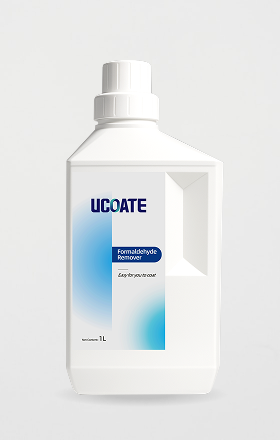
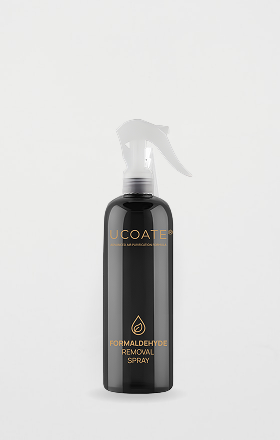
Airing is the main fix, and patience does most of the work. If you want to cut the smell faster, you can lightly treat the surface with the UCOATE Formaldehyde Remover Spray. It's water-based and non-toxic (OECD 420), safe around kids and pets once it's dry, and it binds and breaks formaldehyde down into water and carbon dioxide rather than masking it. In SGS testing it removed 93.83% of formaldehyde. Give the mattress a light, even pass, test a hidden spot first, and let it dry fully before you put on any bedding. Skip it if the cover is water-sensitive or prone to discolouration. It's available on Shopee, and you can read more about whether the spray is safe before you use it.