
Babies and pregnant mums are more sensitive to indoor air pollutants than most adults, and formaldehyde in a nursery comes mainly from new things: a new cot, a new mattress and freshly built carpentry, which off-gas the most when they're brand new. The calmer move is to prepare the room early. Ventilate hard, treat the new wood at the source, and let new items air out and fully dry before baby uses them.
This isn't medical advice. If you have any health concerns during pregnancy or about your baby, talk to your doctor or paediatrician. What follows is the practical side of getting a new-home nursery ready.
Why are babies and pregnant women more vulnerable to formaldehyde?
Infants breathe faster than adults relative to their size, spend long hours in one room, and are closer to surfaces that off-gas. Pregnant women and young children are generally counted among the more sensitive groups for indoor air pollutants. Formaldehyde is classified by IARC as a Group 1 substance, and the WHO indoor guideline sits at around 0.1 mg/m³ (roughly 0.08 ppm). None of this means a new room is automatically harmful. It means it's sensible to lower exposure where you easily can, and a nursery is one of the easiest rooms to plan ahead for.
Where is the formaldehyde in a nursery?
Most of it sits in composite wood and new soft furnishings. In a typical BTO or condo nursery, the usual sources are:
- The cot, especially flat-pack or engineered-wood frames
- A new cot mattress, which can off-gas for the first days to weeks (see new mattress off-gassing)
- Built-in wardrobes and shelving from the renovation
- A feature wall or laminated panelling behind the cot
- Flat-pack storage, drawers and changing tables
Off-gassing is strongest when these are new and is sped up by Singapore's heat and humidity. It eases over months, sometimes longer for heavier carpentry. How long formaldehyde off-gasses goes into the timeline in more detail.
How do I prepare the nursery before baby arrives?
The single best tool is time. If you can, get the room finished weeks ahead rather than days. A simple order works well:
- Finish renovation carpentry first and keep windows open daily
- Treat new built-ins and the cot at the source, then let surfaces dry fully
- Unwrap the mattress early and air it in a ventilated room
- Run fans to move air; warmth and airflow help things off-gas and clear faster
- Wash new fabrics and bedding before use
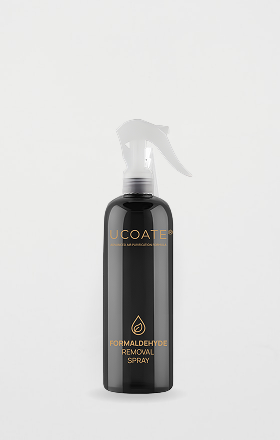
For the wood, the UCOATE Formaldehyde Remover Spray is water-based and non-toxic under OECD 420, safe around children and pets when used as directed and once dry. It binds and breaks formaldehyde down into water and CO2, and removed 93.83% in SGS testing. One 500ml bottle covers roughly 15 to 20 m². Treat the cot, wardrobe interiors and carpentry, let everything dry, then air the room and items out before baby uses the space. It's on Shopee. There's more on using it on new furniture if you want a step-by-step.
Is it safe to treat the room with a baby on the way?
The spray is water-based and has been SGS-tested since 2018, working under normal indoor light with no special equipment. As a sensible precaution, treat surfaces and let them dry fully, ventilate well afterwards, and do the work in advance rather than with baby already in the room. If you're pregnant and prefer someone else handle the spraying, that's an easy call to make. For the full safety picture, see is the spray safe. No product makes a room "safe for baby" on its own; it helps reduce the source, alongside ventilation and airing items out.
What should I prioritise if I'm short on time?
If the room is going up close to your due date, focus on the things baby is in contact with most. Unwrap and air the mattress as early as you can. Treat the cot frame and the inside of any built-in wardrobe that holds baby's clothes. Keep windows open and a fan running daily. Even a week of airing and ventilation makes a noticeable difference, and you can keep ventilating after baby moves in.
Preparing a room for a baby is the same problem childcare centres deal with at scale — see formaldehyde removal for preschools and childcare for how they handle it.