That new-furniture smell is off-gassing — mostly formaldehyde and other VOCs escaping from the glues, finishes and foams in a new piece. To get rid of the new-furniture smell quickly, unwrap the item and air it in a well-ventilated spot, run fans or open windows, and treat the surfaces, especially the insides of cabinets and drawers, so you stop the smell at its source instead of waiting months for it to fade.
What is that new-furniture smell?
It's the chemicals that hold modern furniture together. Most flat-pack wardrobes, beds and sofas use engineered wood (MDF, plywood, particleboard) bonded with formaldehyde-based glues, then sealed with finishes and packed with foam. As those materials cure, they slowly release gas into the air. The smell is strongest when a piece is brand new, and it fades over time as the off-gassing slows down.
Formaldehyde is the part worth taking seriously. It's an irritant that can trigger a scratchy throat, watery eyes, headaches or a stuffy nose, particularly in small bedrooms and for children, who breathe faster and spend more hours asleep in the room.
Why does the smell linger in a closed, air-conditioned room?
Singapore homes are built for the heat, and that's exactly the setup that traps the smell. Off-gassing speeds up with warmth and humidity, so a new wardrobe releases plenty of fumes here. But with windows shut and the aircon running on recirculate, that gas has nowhere to go. It builds up indoors instead of escaping outside.
Closed cabinets and drawers are the worst pockets. Air barely moves inside them, so the concentration stays high and the smell hits you every time you open the door. That's why airflow alone, while it helps, often isn't enough on its own.
How do I air it out first (the free step)?
Always start here, because it costs nothing and makes a real difference:
- Unwrap the item fully and pull off all plastic packaging — sealed wrap holds the fumes in.
- Open every door and drawer so the inside surfaces can breathe.
- Open windows and run a fan, or place the piece on a covered balcony or in the service yard for a few days if you can.
- If you must use the aircon, set it to draw in fresh air rather than recirculate, and ventilate hard whenever you can.
Airing it out lowers the smell, but it doesn't stop the source. The material keeps releasing gas for weeks or months, so on its own this is slow.
How do I treat the source to speed things up?
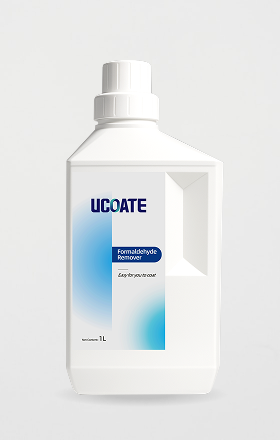
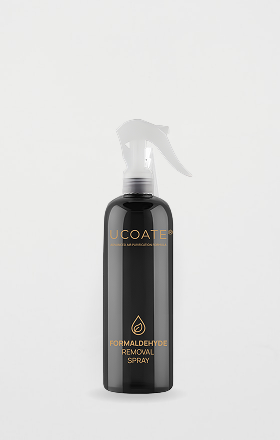
To clear the smell properly, treat the surfaces that are doing the off-gassing. The UCOATE Formaldehyde Remover Spray is made for this. It's a 500ml water-based, non-toxic spray (OECD 420), safe around kids and pets when used as directed, and it binds and breaks formaldehyde down into water and CO2 rather than masking the smell. In SGS testing it removed 93.83% of formaldehyde, and it works under normal indoor light.
Shake well, then spray evenly from 20–30cm across the surfaces, paying attention to the insides of cabinets, drawers and shelves where fumes collect. Let it dry naturally and don't wipe or clean those surfaces for three to five days. For a strong smell, add a second coat after about 30 minutes. Test a hidden spot first, and skip black, water-sensitive or discolouration-prone surfaces. The full walkthrough is in how to use the spray on new furniture, and one 500ml bottle covers roughly 15–20 m². You can also try a DIY approach alongside it.
How long until the smell is gone?
Left to air out on its own, a noticeable new-furniture smell can take weeks to a few months to settle, and heavier off-gassing pieces take longer. Treating the surfaces shortens that a lot, because you're cutting the smell at the source instead of waiting it out. If you want to understand the timeline in more detail, see how long formaldehyde off-gasses. Mattresses are their own case worth reading up on too — see new mattress off-gassing.