
The common signs of formaldehyde exposure indoors are irritated, watery or stinging eyes; a runny, burning or blocked nose; a sore or scratchy throat; coughing; and headaches. They are often worse in a closed, air-conditioned room and ease when you step outside. Because formaldehyde is colourless and your nose stops noticing the smell, these symptoms are sometimes the only clue that levels are high.
What does formaldehyde exposure feel like?
Most people feel it first in the eyes and the back of the nose. It is an irritant, so the tissues it touches react. You might notice a dry, scratchy throat, eyes that sting or water for no clear reason, a nose that runs or feels blocked, and a dull headache that builds the longer you stay in the room. Some people cough or feel a tightness in the chest. The giveaway in Singapore homes is the pattern: symptoms creep up after an hour or two in a sealed, aircon-on bedroom or a freshly renovated flat, then fade once you get into fresh air.
Why do you stop smelling it but still react?
Formaldehyde does have a sharp, slightly pickle-like smell at higher levels, but your sense of smell tires quickly. This is called nose fatigue. Within minutes of walking into a room you may stop registering the odour altogether, even though the gas is still there and your eyes and throat keep reacting. That is why you can walk back in from outside and notice the smell again for a few seconds before it disappears. Trust the irritation, not your nose. If your body keeps complaining in a room that no longer smells of anything, the air is still worth checking.
Who is most sensitive?
Some people react at lower levels and with milder exposure. Watch more closely if your household includes:
- Babies and young children, who breathe faster and spend long hours in the same bedroom or play area
- Elderly family members
- Anyone with asthma, allergies or sensitive airways, who may wheeze or cough sooner
- Pregnant women, where caution is sensible even if symptoms are mild
If you are setting up a room for a little one, our guide on formaldehyde in the baby nursery walks through what to do before the cot goes in. For the broader picture on what counts as a sensible indoor level, see what a safe formaldehyde level at home looks like.
How do you tell it apart from a cold, haze or dust allergy?
This is the tricky part, because the symptoms overlap. A cold usually comes with a fever, body aches and that run-down feeling, and it follows its own course over a week or so regardless of where you are. A dust or haze reaction tends to track outdoor air quality or a dusty cleaning session. Formaldehyde is different in one key way: it is tied to a place and a situation. If everyone in the same new room gets sore eyes and headaches, if symptoms lift the moment you leave, and if it started after new furniture, flooring or a renovation, formaldehyde off-gassing is a strong suspect. Heat and humidity speed up that off-gassing, so a hot afternoon with the windows shut tends to make it worse.
When should you take it seriously and see a doctor?
Mild irritation that clears in fresh air is a prompt to act on your air, not a medical emergency. But take it seriously if symptoms are severe, if breathing becomes difficult, if a child or someone with asthma is struggling, or if the eye, nose and throat irritation simply will not settle. This isn't medical advice. If symptoms persist or are severe, please see a doctor, and mention any recent renovation or new furniture so they have the full picture. Formaldehyde is classed by IARC as a Group 1 carcinogen, so reducing long-term exposure is worth the effort even when day-to-day symptoms feel minor.
What can you do about it?
Start by airing the place out. Open windows and run a fan to push stale air out, ideally a couple of times a day, since aircon with the windows shut just recirculates the gas. Then deal with the source: new plywood, MDF, laminate and some fabrics off-gas for months and sometimes years, so the cheapest fix is reducing what comes in. If you want to know how high your levels actually are, see how to test formaldehyde levels at home, and our overview of health impacts and regulations in Singapore sets useful context.
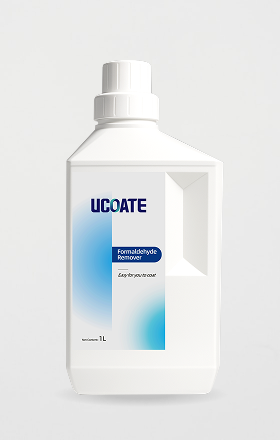
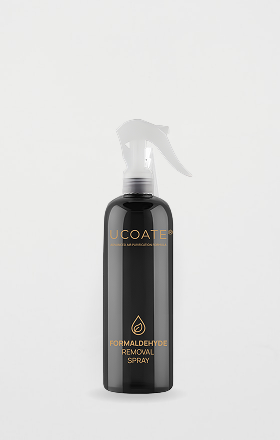
If you would rather treat the surfaces that are off-gassing, the UCOATE Formaldehyde Remover Spray is a 500ml water-based hand spray you can use on new wardrobes, beds and cabinets yourself. It binds and breaks formaldehyde down into water and carbon dioxide rather than masking the smell, works in normal indoor light, and is non-toxic under OECD 420, so it is safe around children and pets when used as directed. In SGS testing it removed 93.83% of formaldehyde. One bottle covers roughly 15 to 20 m². It is on Shopee if you want to try it on a single room first.