
A little, and only for a while. Activated and bamboo charcoal do adsorb some formaldehyde from the air right around them, but a bag fills up within a few weeks, can release a bit back into the air when it gets warm, and never touches the carpentry that's still off-gassing. So charcoal is a minor helper for a small enclosed space, not a way to clear a whole room.
Does charcoal remove formaldehyde at all?
It does something, which is why charcoal bags sell so well after a renovation. The honest version is that the effect is small and short-lived. A bag sitting in the corner of a bedroom only ever sees the air molecules that happen to drift past it, and it stops working long before the source does. Treat it as a tiny sponge in a big, constantly refilling pool.
How does charcoal adsorption work, and where does it stop?
Activated charcoal and bamboo charcoal both work by adsorption: formaldehyde molecules stick to the carbon's porous surface as the air moves past. It's a real chemical attraction, not a gimmick. The catch is that all those tiny pores are finite. Once they're full, the carbon can't hold any more, and the bag has nothing left to give. That's usually within a few weeks of real use in a Singapore flat.
- It only pulls formaldehyde from the air nearby, not from across the room.
- It does nothing to the built-in wardrobes, cabinets and furniture that keep emitting.
- On a hot, stuffy afternoon, a saturated bag can release some of what it captured back into the air.
- Once full, it just sits there looking useful while doing nothing.
Bamboo charcoal bags vs the actual source: which wins?
The source wins, every time. Composite-wood furniture and laminated boards can off-gas formaldehyde for months, sometimes years, as the resin slowly breaks down. A charcoal bag has no way to reach into the board and stop that. It can only mop up a fraction of what's already escaped into the air around it. Put a bag next to a brand-new wardrobe and the wardrobe keeps emitting at the same rate the next morning. The maths doesn't favour the bag.
Do you really "recharge" charcoal bags in the sun?
Not in any way that helps with formaldehyde. Leaving a bag in the sun drives off some moisture, which is why it feels lighter and fresher afterwards. But it doesn't meaningfully push the trapped formaldehyde back out of the deep pores, so it doesn't restore the bag's capacity to capture more. You end up with a drier bag that's still mostly full. If anything, gentle warming risks releasing a little back indoors if you do it in the room rather than outside.
This is the same limitation a carbon filter has in an air purifier. If you've read whether an air purifier helps with formaldehyde, you'll recognise the pattern: carbon saturates, then quietly stops working until you replace it.
So what actually removes formaldehyde?
Two things do the real work: ventilation and treating the source. Open the windows and keep air moving so the formaldehyde that's already escaped gets diluted and pushed out. Then deal with the furniture and carpentry that keep releasing it, rather than chasing the air with a bag. For a fuller rundown of what's worth doing, see our guide to home remedies that actually work, and if you're wondering about greenery, whether plants remove formaldehyde is worth a read too.
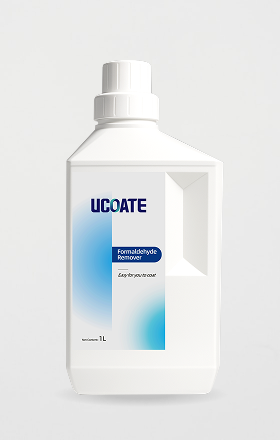
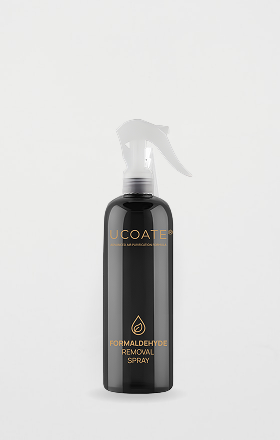
To treat the source directly, this is where a product earns its place. The UCOATE Formaldehyde Remover Spray is water-based and non-toxic (OECD 420), safe around kids and pets when used as directed. Unlike charcoal, which only adsorbs and holds formaldehyde until it's full, the spray binds with the formaldehyde and breaks it down into water and CO2 under normal indoor light. It removed 93.83% in SGS testing. One 500ml bottle covers roughly 15 to 20 square metres, and you can pick it up on Shopee. For the bigger picture on tackling it across a home, see our formaldehyde removal guide for Singapore.