
Short answer: under 0.3 mg/m³ is clean, 0.3 to 1.0 mg/m³ is perfectly liveable, and anything past 1.0 is worth looking into. Long answer below, because the number on its own is less useful than people assume.
The five-level scale
Most consumer meters describe their TVOC readings against a five-level scale published by the German Federal Environment Agency. It's the closest thing to a common reference the industry has, and it assumes roughly eight hours of exposure a day.
Under 0.3 mg/m³ — clean. Nothing to do. This is what a settled home with no recent work reads.
0.3 to 1.0 mg/m³ — acceptable. Fine for living in continuously. Normal ventilation is enough.
1.0 to 3.0 mg/m³ — elevated. Ventilate more and go looking for the source. Something is releasing.
3.0 to 10 mg/m³ — high. Find the source and deal with it. Running an air purifier at this and calling it handled doesn't work.
Over 10 mg/m³ — unacceptable. Ventilate immediately and limit how long anyone spends in there until it comes down.
Singapore's own SS 554 code of practice sets guideline values for indoor air quality in air-conditioned buildings, TVOC among them. For a commercial or tenancy dispute, that's the document to work from — not a meter you bought online.
What a renovated flat actually reads
Here's where the scale needs some local context. A newly renovated HDB or condo unit in Singapore very often reads in the 1 to 3 mg/m³ band in the first few weeks, and higher isn't rare. Fresh paint, new adhesive under the flooring, sealant around every joint, new joinery, and a sealed air-conditioned box holding all of it in.
That isn't a crisis. It's what a renovation smells like, quantified. The question worth asking isn't "is my number high" — it will be — but "is it coming down".
The trend matters more than the reading
Solvent VOCs from paint drop off fast when a place is ventilated. Within four to eight weeks of decent airing you'd expect a meaningful fall. If you're three months in and still sitting at the same number, something is releasing steadily rather than flashing off, and ventilation alone isn't going to finish the job.
To get a trend worth anything, be consistent. Same spot in the room. Same time of day. Room closed up for a few hours before you read it, because a reading taken with the windows open just measures outside. Write them down. Five readings over five weeks tells you more than fifty in an afternoon.
Don't read it in isolation from HCHO
Your meter shows formaldehyde too, and the relationship between the two is the useful part.
TVOC high, HCHO low means paint, adhesive, sealant or something you're cleaning with. That's the good version — most of it ventilates out.
HCHO high, TVOC moderate means the carpentry. Pressed board and the glue in it, which releases for years rather than weeks and doesn't care much about how long you leave the windows open. The reference tables for both numbers are worth a look if you're trying to work out which situation you're in.
When to stop watching and start treating
Our rough rule: if you've ventilated properly for a month and the number hasn't moved, you have a source, not a residue. At that point more airing is just maintenance.
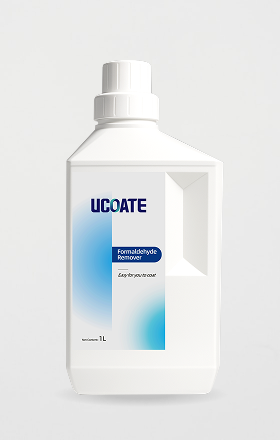
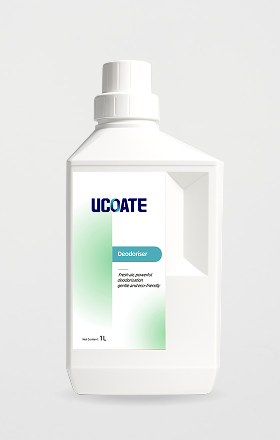
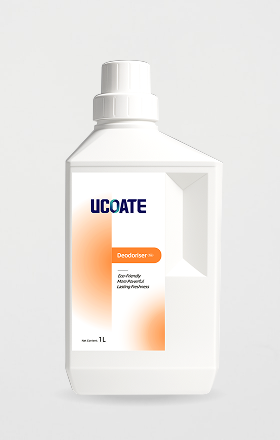
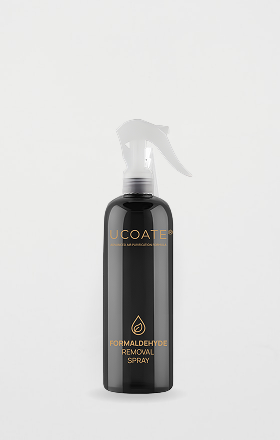
Treating means dealing with the surfaces doing the releasing. For formaldehyde that's the new joinery, and a water-based remover applied to it — inside cabinets and wardrobes especially, where the gas concentrates. For the broader VOC and odour load it's a different chemistry: our Deodoriser was tested at over 85% TVOC removal, over 93% benzene and over 90% ammonia in an independent Japanese laboratory report.
And if the number genuinely matters — a health issue, a dispute with your contractor, a tenancy question — get a proper indoor air quality test done. A consumer meter is a useful guide and terrible evidence.