The sofa arrives, it looks exactly like the showroom one, and within a day the whole living room smells of it. Whether that's a problem depends on what the smell actually is.
Three different smells wearing the same name
Genuine leather smells of the tanning process — the chemicals used to turn hide into leather. It's rich rather than sharp, most people quite like it, and it settles within a few weeks. Nothing to do here.
Bonded and PU leather is a different thing entirely. It's leather fibre and polyurethane bonded to a backing with adhesive, and what you're smelling is largely that adhesive plus the finishing chemicals on top. Sharper, more chemical, and it lasts considerably longer.
Fabric sofas smell of finishing treatments, dyes, and the adhesives holding the frame and foam together. Foam has its own off-gassing profile, and on a cheaply built piece there's a lot of glue in there.
The useful tell is the character of the smell. Warm and organic means leather doing what leather does. A sharp solvent edge means adhesive, and that's the one worth acting on.
Why it hangs around in a Singapore flat
Off-gassing speeds up with heat and humidity, so the release rate here is higher than the piece was probably designed around. That would clear faster if the air moved — but most flats run the aircon with windows shut, so the compounds come out of the sofa and stay in the room.
A sofa in a closed, air-conditioned living room can smell noticeably for months.
What to do first
Ventilate the room properly — windows open, fan running, done for stretches rather than minutes. This is the main lever and it's free.
Pull the sofa away from the wall for the first couple of weeks so air reaches the back and underside, which is usually where the rawest adhesive is.
Take the cushion covers off if they're removable and air them separately. Wash them if the label allows.
Keep it out of direct sun. Heat accelerates the off-gassing, but it also damages leather and fades fabric, so this isn't a shortcut worth taking.
If it's still there after a month
At that point ventilation has done what it's going to do, and the remaining smell is coming out of the material steadily rather than clearing.
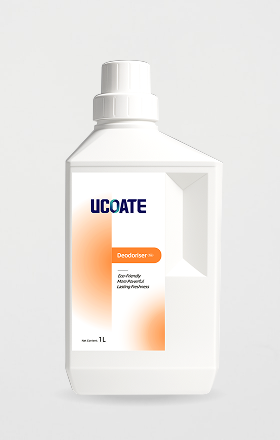
Our Deodoriser PRO is formulated for leather, synthetic fabrics and coated furniture, and it neutralises the VOCs behind the odour instead of layering fragrance over them. Two things to observe: patch-test somewhere unseen first, because leather finishes vary enormously, and avoid black or water-sensitive materials, which can mark.
Spray evenly, let it dry naturally, and don't wipe the surface for a few days.
If you're buying and want to avoid this
Smell the display piece, and specifically get close to the back and underside where the finish is thinnest. A showroom model has usually been out for months, so if that still smells, the one arriving from the warehouse will be considerably stronger.
Ask what the upholstery actually is. "Leather" on a spec sheet covers full-grain hide and bonded fibre with equal enthusiasm, and they behave nothing alike.
And if the sofa arrived alongside a full renovation, the smell probably isn't just the sofa — see TVOC and VOC removal for the rest of it.