Musty is a specific smell and it means something specific. Something in your flat is damp enough that mould or bacteria are actively growing on it, and what you're smelling is the compounds they give off.
That's the useful bit, because it tells you the order to work in. Find the water first. Everything else is second.
Where it hides in a Singapore flat
Ambient humidity here sits high enough that you don't need a leak — you just need somewhere with no airflow.
Built-in wardrobes and storerooms. The classic. Closed doors, no ventilation, clothes and cardboard holding moisture. Open one that's been shut for a week and you'll know immediately.
The aircon. Moisture on the coil, standing water in the drainage tray, biofilm growing in both. The giveaway is that the smell is worst in the first few minutes after you switch it on.
Bathrooms that don't dry. Especially ones with a weak or absent exhaust fan. Look at grout, silicone seals and the underside of anything wall-mounted.
Under sinks and behind appliances. Slow leaks that never puddle enough to notice but keep a cabinet base permanently damp.
External walls. Water ingress through the façade, usually appearing as discolouration or a chalky bloom on the inside face.
Fix the moisture first
This is the part there's no way around. Any odour treatment applied while the material is still wet is a temporary result, because you've treated the smell and left the thing making it.
Depending on what you found: repair the leak, service the aircon properly, get airflow into the wardrobe, sort out the bathroom extraction, run a dehumidifier if the flat is generally too humid. Then let everything dry completely — properly dry, not surface dry.
Then deal with the growth and the smell
Visible mould gets cleaned off. Anything soft and heavily affected — cardboard, some fabrics, saturated MDF — is usually easier to throw out than to save.
What's left is odour absorbed into porous surfaces that the cleaning didn't reach. Wardrobe interiors and MDF carpentry are the usual culprits, because pressed board soaks up smell and holds it.
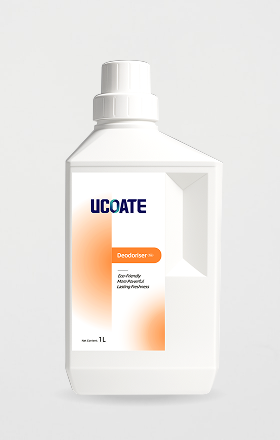
That's where a surface treatment earns its place. Our Deodoriser PRO neutralises the VOCs causing the odour rather than covering them, and it's formulated for painted walls, coated furniture, laminate, wallpaper and fabrics. Applied after the damp is sorted, it holds. Applied before, it doesn't.
Keeping it away
Leave wardrobe and storeroom doors open when you're out. Airflow costs nothing and prevents most of this.
Get the aircon serviced on a real schedule rather than when it starts smelling.
Run the bathroom fan for a while after showering, not just during.
And if you're renovating, think about whether that sealed storeroom needs a vent. It's a small line item that solves a permanent problem. For larger or commercial cases, see odour removal in Singapore.