This one is about judging a treatment after you have applied it. If you are still deciding what to buy, the buyer's guide is the one you want.
Formaldehyde is one of the most common indoor air quality concerns after renovation in Singapore.
With extensive use of built-in carpentry, engineered boards and adhesives, formaldehyde off-gassing often continues long after renovation work is completed.
While many formaldehyde removal products and methods are available on the market, not all provide real or lasting results.
Some solutions show short-term improvement but fail to address the continuous release of formaldehyde from interior surfaces.
So how can homeowners, renovation professionals and service providers properly evaluate whether a formaldehyde removal product truly works?
Based on real on-site applications and practical experience, there are three key criteria that matter.
1.Noticeable improvement in indoor comfort after application
In newly renovated homes and offices, formaldehyde exposure often causes clear physical discomfort.
Common symptoms include eye irritation, a sharp or stinging sensation, and difficulty staying in the space for extended periods.
A genuinely effective formaldehyde removal product should lead to a noticeable improvement in comfort shortly after application.
The indoor environment should feel less irritating and more comfortable to occupy, not only show a change in readings on a testing device.
Air quality measurements are important, but comfort-based feedback from occupants remains one of the most practical indicators of real improvement in indoor air quality.
2.Ability to maintain results during the peak off-gassing period
A common misconception is that formaldehyde disappears once renovation smells fade.
In reality, formaldehyde, also known as HCHO, is continuously released from boards, cabinets, furniture and bonding materials.
This off-gassing is most intense during the first few weeks after renovation.
This is also the period when many solutions fail.
Some products and methods can temporarily lower formaldehyde levels.
However, after a few days, levels rebound and discomfort returns.
From a practical industry perspective, if a product can maintain its effectiveness for one week or longer during this peak emission period, it is already considered highly effective.
This indicates that the solution is addressing formaldehyde at the source, rather than providing short-term masking.
3.No secondary pollution introduced during use
Another important but often overlooked factor is secondary pollution.
Some formaldehyde treatments release strong odours or cause discomfort during application.
While this is sometimes mistaken as a sign of strength, it often suggests that one irritant is simply being replaced by another.
Effective formaldehyde control should not introduce new air quality problems.
A well-designed solution should be stable, water-based, and comfortable to apply in occupied indoor environments.
If a product itself causes irritation during use, its long-term suitability should be carefully questioned.
Why UCOATE Meets These Criteria
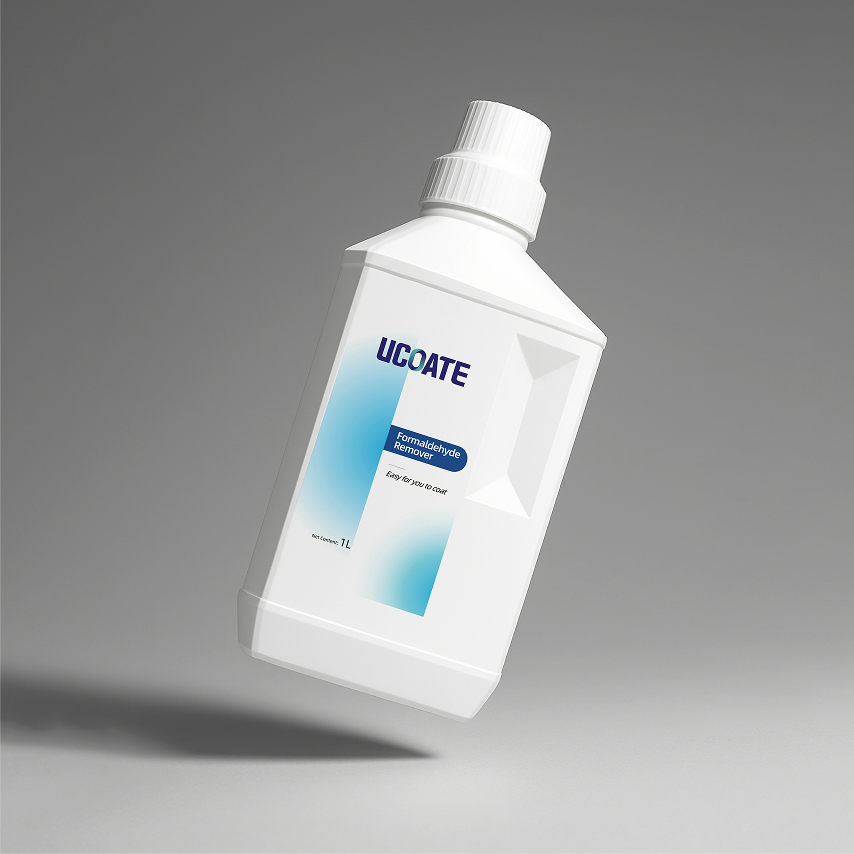
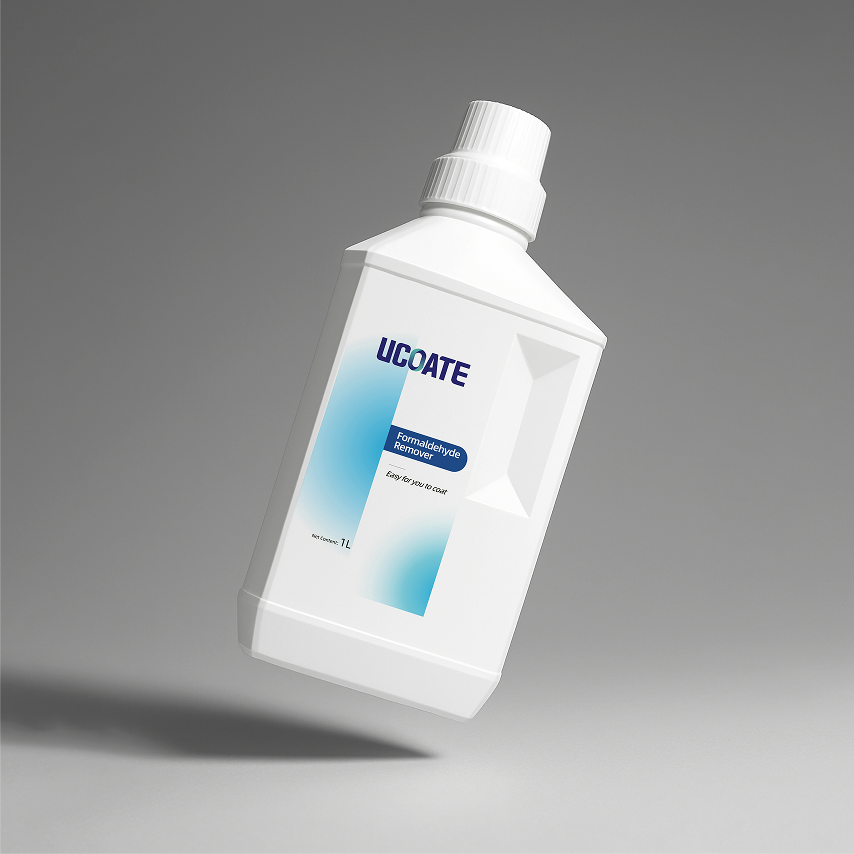
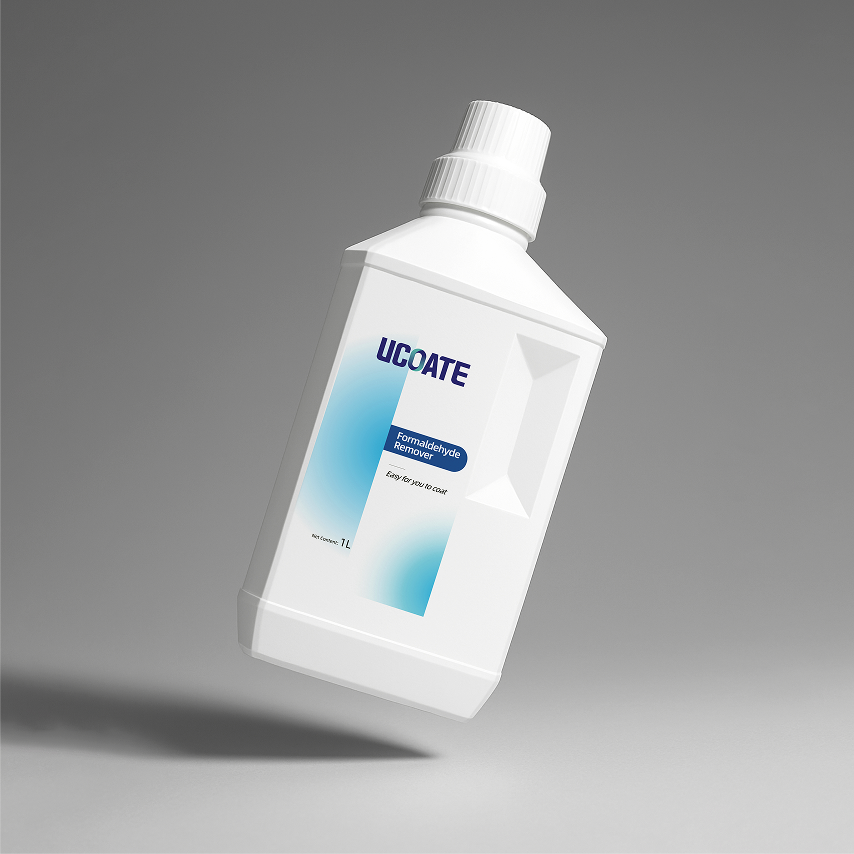
UCOATE Formaldehyde Remover is developed for professional use in real renovation environments.
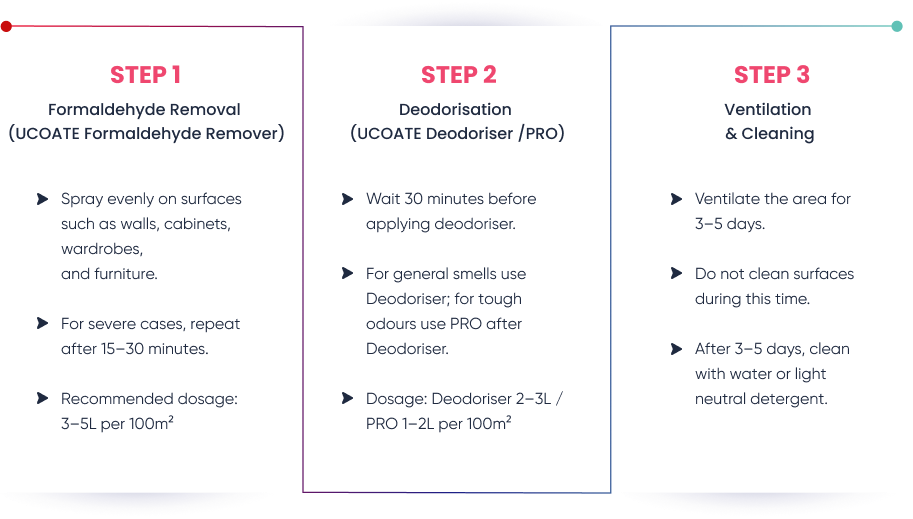
It is designed to be applied directly to emission sources such as built-in carpentry, cabinets and furniture, where formaldehyde off-gassing occurs continuously.
Through repeated on-site applications, UCOATE has demonstrated:
- Noticeable improvement in indoor comfort after application
- Stable performance during peak formaldehyde release periods
- No secondary irritation or unpleasant odours during use
For these reasons, UCOATE is trusted by professional formaldehyde removal companies, renovation-related service providers and industry practitioners.
Making an Informed Choice
Choosing a formaldehyde removal product should not rely solely on instant results or isolated test readings.
Long-term comfort, sustained performance during off-gassing, and safety during application are far more reliable indicators of true effectiveness.
By focusing on these criteria, homeowners and professionals in Singapore can make more informed decisions and avoid solutions that offer only temporary relief.