A landed home scales the problem up. A reconstruction or a major A&A brings in far more new carpentry than a flat — built-ins across several bedrooms, more than one kitchen or wet area, study and storage joinery, and often a helper's room, store rooms and an attic. More new wood across more floors means more formaldehyde, and more enclosed rooms for it to build up in.
The DIY method is the same as anywhere; you just need a plan for the area, and probably more than one bottle.
Work floor by floor
Treat the house in sections rather than trying to do everything in one go. For each floor, hit the new carpentry: wardrobe and cabinet interiors, drawers, kitchen and wet-area joinery, feature walls and any built-in storage.
Prioritise the enclosed, low-airflow rooms
These hold formaldehyde the longest because air barely moves through them. In a landed home they add up:
- Walk-in wardrobes and any room lined with new built-ins
- Store rooms, the under-stairs cupboard and utility spaces
- The helper's room, which is often small and tucked away
- An attic or enclosed top floor, where heat makes off-gassing worse
Then the bedrooms people sleep in
After the enclosed spaces, give priority to the rooms where the family spends eight hours a night — treat the new wardrobes, bed frames and any new mattresses there first.
Plan your coverage
One 500ml bottle covers roughly 15–20 m², so a whole landed home will need several. Buy enough to do every floor in one pass rather than stopping halfway. And because a big renovation off-gasses for months, open up the house and get cross-ventilation going whenever the weather allows, on top of treating the source.
What to use
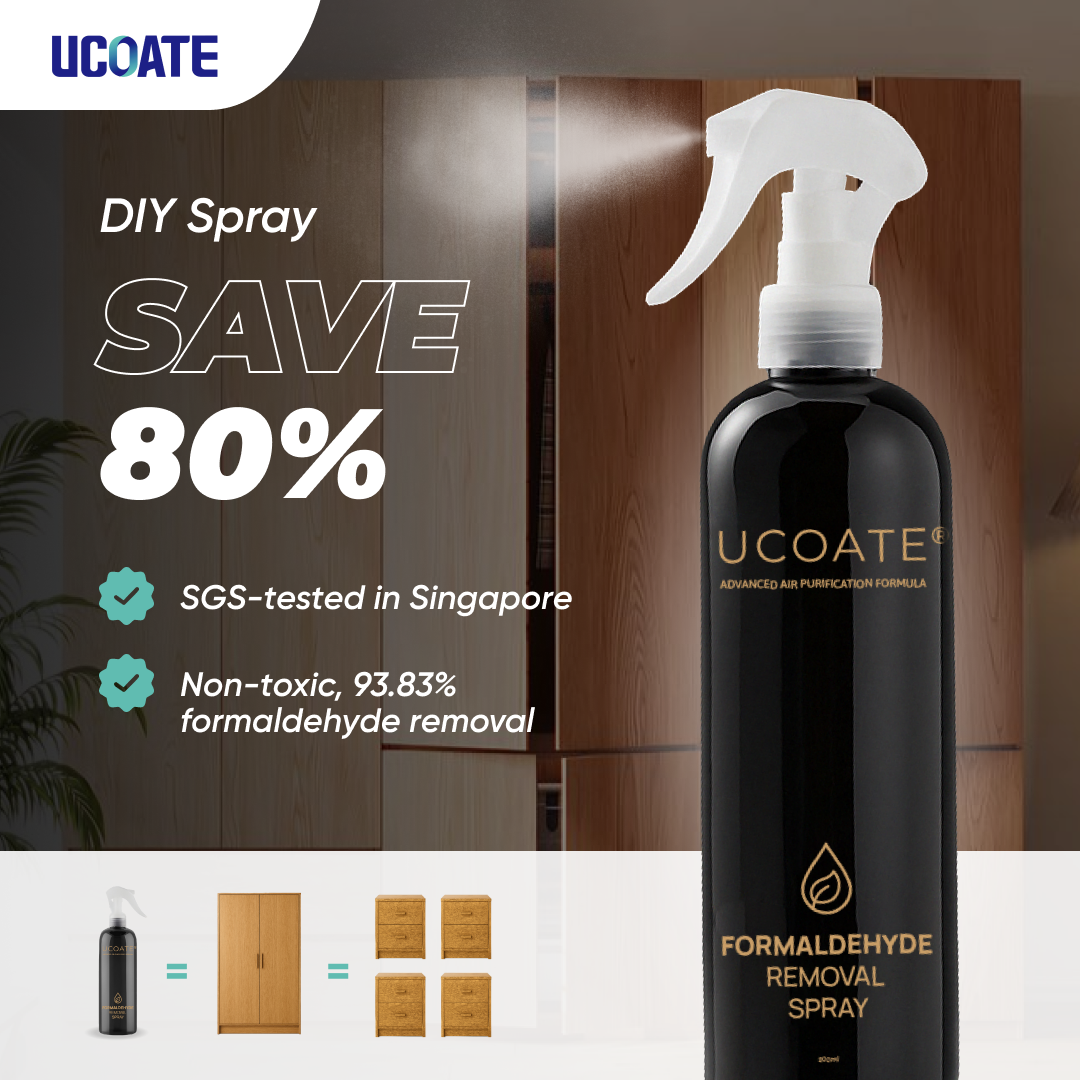
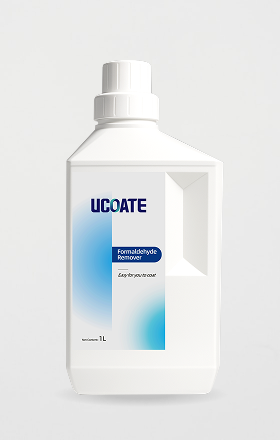
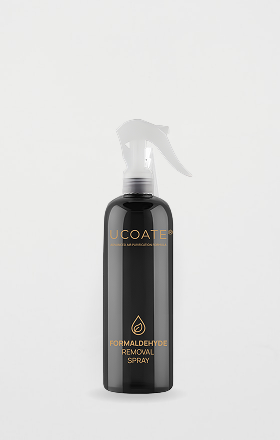
For DIY work at home, we make the UCOATE Formaldehyde Remover Spray — a 500ml hand spray that runs on the same SGS-tested chemistry we have supplied to Singapore renovation contractors and resellers since 2018. It is water-based and classified non-toxic under OECD 420, so it is safe to use around children and pets when you follow the directions on the bottle. Rather than masking the smell, it binds the formaldehyde and breaks it down into water and carbon dioxide, and it works in normal indoor light — no sunlight or machines needed. In SGS laboratory testing the formulation removed 93.83% of formaldehyde. You can buy it on Shopee with delivery across Singapore.
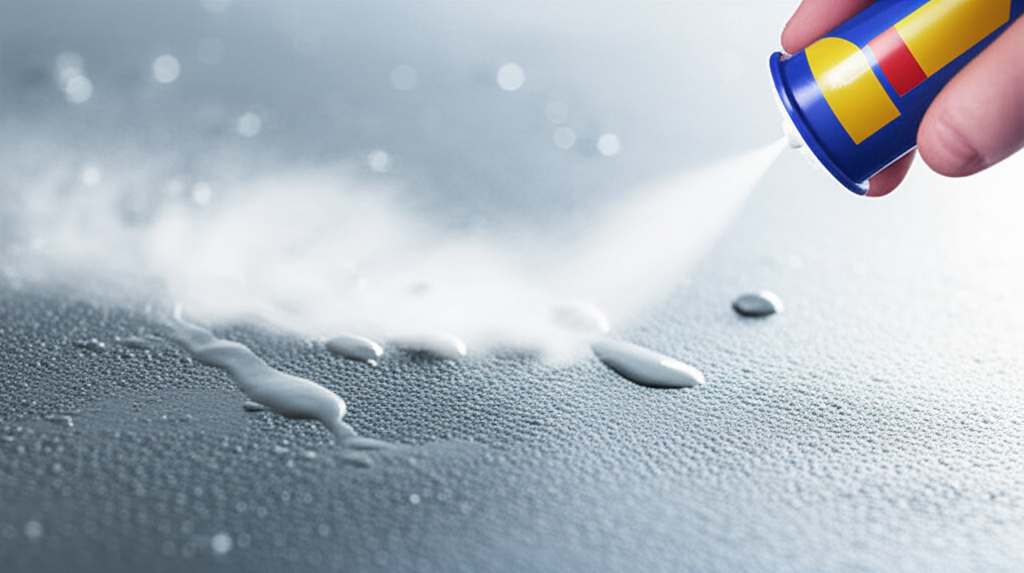
How to apply it: shake well, spray evenly from 20–30cm onto the surface, let it dry naturally, and avoid wiping or cleaning the surface for 3–5 days. For stronger smells, give it a second coat after about 30 minutes. One 500ml bottle covers roughly 15–20 m². Skip black, water-sensitive or discolouration-prone surfaces, and test an out-of-sight spot first if you are unsure.